When it comes to getting a crisp, professional finish on your lawn, your mower engine is only half the equation. The other half lies underneath the deck.
Exmark commercial and residential mowers are known for providing one of the cleanest cuts in the industry, but using the wrong type of blade for your specific grass type or season can leave your lawn looking ragged or uneven.
Whether you’re looking to bag clippings, mulch leaves in the fall, or side-discharge thick turf, here is a complete breakdown of the primary Exmark mower blade types and how to pick the best one for your yard.
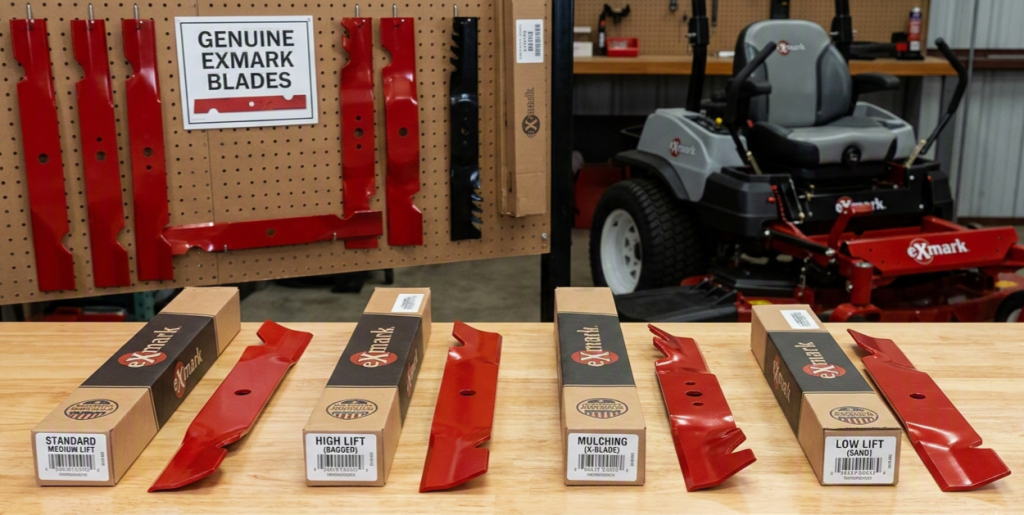
1. High-Lift Blades
Best For: Bagging, thick/wet grass, and dense turf.
High-lift blades are designed with a deep, upward-curved wing (“sail”) on the trailing edge. This design creates maximum suction and airflow beneath the deck, pulling grass blades upright just before the cutting edge slices through them.
Advantages:
- Superior suction lifts bent or flat grass for a uniform cut.
- Generates the velocity required to throw clippings deep into grass baggers without clogging.
- Ideal for thick, damp, or overgrown spring grass.
Keep in Mind: High airflow pulls up extra dust and dirt in dry or sandy soil conditions, which can accelerate wear on the deck and blades.
2. Standard / Medium-Lift Blades (2-in-1)
Best For: Everyday mowing and side-discharging.
Standard blades feature a moderate sail height that creates a balance between lift and engine load. Most Exmark mowers come equipped with standard or medium-lift blades right out of the factory because they perform reliably in a wide variety of turf conditions.
- Advantages:
- Balanced performance for general discharge and light bagging.
- Uses less engine horsepower compared to high-lift blades.
- Generates less dust clouds in dry terrain.
- Keep in Mind: They won’t produce the extreme suction needed for heavy fall leaf cleanup or dense bagging applications.
3. Dedicated Mulching Blades (3-in-1)
Best For: Nutrient recycling, clean lawns without bagging, and frequent mowing.
Mulching blades feature a curved design, extended cutting edges, and distinct airfoils that keep grass clippings circulating inside the deck chamber. Instead of discharging the grass immediately, the blade chops clippings multiple times into fine particles before dropping them into the soil as natural fertilizer.
- Advantages:
- Eliminates the need to bag, haul, or dispose of grass clippings.
- Returns vital nitrogen and nutrients directly back to your turf.
- Leaves a clean finish with minimal visible clippings when used with an Exmark mulch kit or baffle system.
- Keep in Mind: Requires strict adherence to the “one-third rule” (never cut off more than 1/3 of the grass height at a time). Overgrown or wet grass can clump up under the deck.
4. Solid & Notched-Tooth Mulching Blades (Gator Style)
Best For: Leaf shredding, high-growth turf, and tough debris.
Often referred to as serrated or notched-tooth blades, these specialized mulching blades feature raised teeth along the back edge of the blade. As the blade spins, these teeth shred clippings and fallen leaves into tiny bits before discharging them.
- Advantages:
- Exceptional performance during autumn leaf cleanup.
- Prevents heavy clipping lines when cutting taller grass.
- Works well even without a fully enclosed mulching baffle kit.
- Keep in Mind: They require careful sharpening due to the geometry of the teeth and airfoils.
5. Low-Lift Blades
Best For: Sandy soil, dry climates, and dusty conditions.
Low-lift blades have a minimal upward curve on the trailing edge, generating significantly less suction than standard or high-lift blades.
- Advantages:
- Prevents sand, grit, and soil from being sucked into the deck, drastically reducing abrasive wear on the blade and deck shell.
- Demands less power from the engine, saving fuel.
- Keep in Mind: Poor performance for bagging and mulching; grass must be kept relatively dry and well-maintained to get a clean cut.
Quick Comparison Guide
| Blade Type | Airflow / Lift | Primary Application | Recommended Grass Condition |
| High-Lift | High | Bagging & Discharge | Thick, tall, or wet grass |
| Standard / Med-Lift | Medium | Side Discharge | Normal, weekly maintenance |
| Mulching | Specialized Recirculation | Nutrient Recycling | Dry, frequently mowed turf |
| Notched / Leaf | Shredding Airflow | Leaf Cleanup & Heavy Turf | Dry grass & fall leaves |
| Low-Lift | Low | Side Discharge | Sandy, loose, or dusty soil |
OEM vs. Aftermarket Exmark Blades: Does It Matter?
While aftermarket blades might save a few dollars upfront, using genuine Exmark Original Equipment Manufacturer (OEM) blades ensures:
Exact Fitment: Exmark blades feature precise center-hole dimensions (such as 15/16″ round spindles on commercial decks) to eliminate spindle play and deck flex.
Proper Hardness & Weight Balance: Correct steel tempering prevents blade cracking while maintaining an edge longer without putting extra stress on spindle bearings.
Optimized Tip Speed: Airfoils are engineered specifically around Exmark deck dynamics to maintain airflow efficiency
Maintenance Tip: Keep ‘Em Sharp and Balanced
No matter which blade type you choose, even the best Exmark blade will tear grass instead of slicing it if allowed to go dull. Inspect and sharpen your blades every 25 hours of operation (or sooner if you hit rocks or roots), and always balance the blade before reinstalling to prevent severe vibration damage to your spindle bearings.